
Skin Quality & Tone
Melasma treatment in Raleigh, built for your skin tone.
The best melasma treatment in Raleigh is not a single laser or a miracle cream. It is a staged clinical protocol built specifically for the way melasma behaves on your skin, especially if you have Fitzpatrick IV, V, or VI skin (medium-deep to deep tones, common in Latin, South Asian, Middle Eastern, and African American patients). Melasma mistreated at the wrong practice does not just fail to improve. It often gets worse.
- Calibrated for Fitzpatrick IV-VI
- Pigment-safe laser platforms
- Physician-supervised
- Bilingual consultations (EN/ES)
- 4.9★ on Google
Clinically reviewed by Dr. Susan Lovelle, MD, Medical Director, La Miel Aesthetics. Adriana Sandoval Veliz, RN/MSN, contributed clinical input. Last reviewed: . How we review
What this is
What melasma actually is
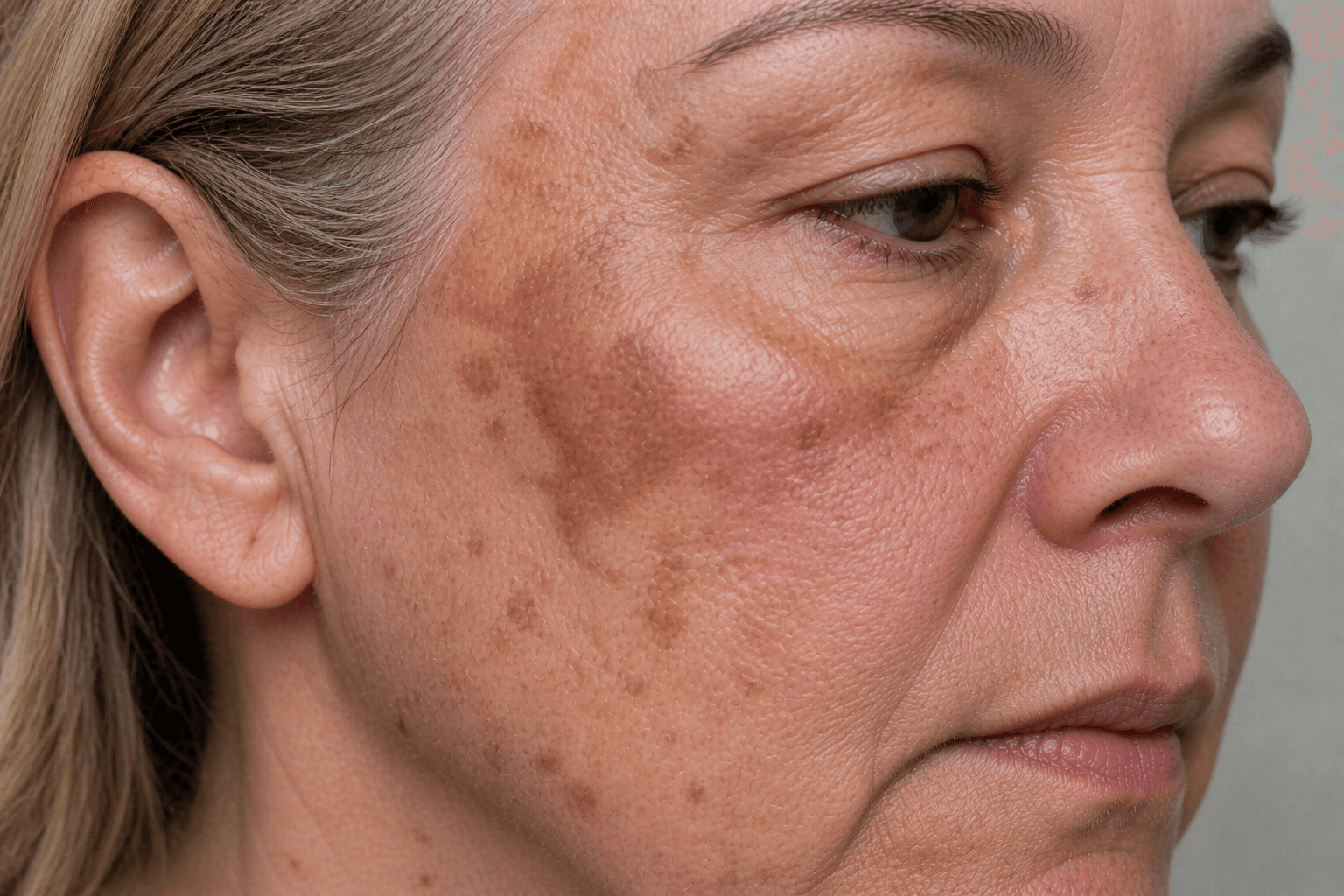
Melasma is a chronic, hormonally driven form of hyperpigmentation. It shows up as symmetric patches of brown or gray-brown discoloration, most often across the cheeks, forehead, upper lip, bridge of the nose, and sometimes the jawline. It is more common in women than men, more common in darker skin tones than lighter ones, and frequently triggered or worsened by pregnancy, birth control, hormonal shifts, heat, and sun exposure.
What makes melasma different from other pigmentation is that the cells producing the excess pigment (melanocytes) are not just overactive at the surface. Depending on melasma type (epidermal, dermal, or mixed), the pigment can sit deep enough in the skin that surface treatments alone cannot reach it. And aggressive surface treatments that work on sun spots, like strong IPL or ablative resurfacing, can actually inflame melanocytes and worsen melasma, a phenomenon called paradoxical hyperpigmentation.
Melanin is not just a color. It is a biological defense system, and in deeper skin tones it is more reactive. That reactivity is protective against UV damage, but it also means inflammation of any kind (from sun, from trauma, from the wrong laser) can trigger a new round of pigment production. This is why melasma needs its own dedicated clinical approach, not a generic pigmentation package.
At La Miel
Our melasma protocol
We treat melasma as a chronic condition that requires management, not a single procedure that produces a cure. Our program runs in phases, usually over three to six months for visible results and with an ongoing maintenance plan afterward.
Phase 1: Calm and prepare (weeks 1 to 4)
Before we treat pigment, we reduce inflammation and strengthen the skin barrier. Physician-prescribed topicals combining tranexamic acid, azelaic acid, and gentle actives safe for darker skin. Medical-grade broad-spectrum SPF with iron oxides (critical, because visible light triggers melasma just like UV does). Customized home routine from SkinBetter Science, SkinMedica, or GlyMed.
Phase 2: Active treatment (months 2 to 4)
Pigment-safe chemical peels (mandelic, lactic, carefully formulated Jessner variations) chosen for depth and gentleness. Tranexamic acid (oral or injected, under physician supervision), one of the strongest evidence-based treatments for stubborn melasma. Nd:YAG laser at conservative settings. Microneedling with topical actives. PRF skin treatments for regenerative support.
Phase 3: Maintenance (ongoing)
Melasma does not go away permanently. Once we have cleared a significant percentage of pigment, we build your maintenance plan: daily skincare, strict sun and visible-light protection, and periodic clinical touch-ups. Most patients need one clinical treatment every two to three months to hold results.
Ready to start?
A consultation tells us what your skin needs. It takes under an hour.
What to expect
Our approach vs. what most practices offer
Below is how our melasma program compares to what patients typically encounter at a non-specialty medspa. The differences are not cosmetic; they are clinical.
Fitzpatrick-specific protocols
Built for IV-VI skin at La Miel. Usually one protocol for all elsewhere.
Physician oversight
Dr. Susan Lovelle, MD, former plastic surgeon. Often nurse injector only elsewhere.
Prescription-strength options
Tranexamic acid (oral or injected), physician-formulated topicals. Usually OTC strength only elsewhere.
Laser platform
Nd:YAG and alternatives chosen for melasma and skin of color. Often IPL elsewhere, which can worsen melasma.
Maintenance plan
Built into every protocol at La Miel. Often sold separately after a "package" elsewhere.
At a glance
| Layer | Intervention | Frequency | Expected contribution | Risk to dark skin |
|---|---|---|---|---|
| 1. Topicals | Tranexamic acid, azelaic acid, kojic acid, cysteamine | Daily (AM and PM) | Suppresses new pigment formation | Minimal when correctly cycled |
| 2. Chemical peels | Mandelic or gentle Jessner | Monthly, 4 to 6 sessions | Exfoliates existing pigment, brightens | Safe when correctly selected |
| 3. Laser | Low-fluence Nd:YAG (1064 nm) only | Monthly, conservative settings | Breaks up pigment for topical clearance | Safe for Fitzpatrick IV to VI |
| 4. Sun protection | Tinted SPF 50+ with iron oxides, UPF clothing | Daily, year-round | Prevents UV and visible light triggering | Essential; skipping it collapses the plan |
| 5. Maintenance | Topical taper plus quarterly peels | Ongoing | Prevents recurrence | Minimal when maintained |
Scroll sideways to see the full table.
Common questions
Frequently asked questions
The best melasma treatment for Fitzpatrick IV through VI skin is a staged protocol, not a single procedure. It typically combines prescription-strength topicals (tranexamic acid, azelaic acid, pigment inhibitors), pigment-safe chemical peels (mandelic, lactic, gentle Jessner), conservatively-used Nd:YAG laser, strict broad-spectrum SPF with iron oxides, and ongoing maintenance. Avoid IPL, aggressive TCA peels, and Q-switched lasers unless you are being treated by a provider with specific melasma and skin-of-color expertise. Our entire protocol at La Miel Aesthetics is built for this.
Ready to map your plan?
Tell us what you would like to address. We will recommend a sequence that actually fits your skin, your anatomy, and your timeline.
Ready When You Are
Two ways to start: book the specific treatment you came for, or book a consultation and we will build your plan together.
Tue to Wed 10 to 5, Thu 10 to 9, Fri 10 to 3. Closed Sat to Mon.
7718 Six Forks Road, Suite 106, Raleigh, NC 27615