
Skin Quality & Tone
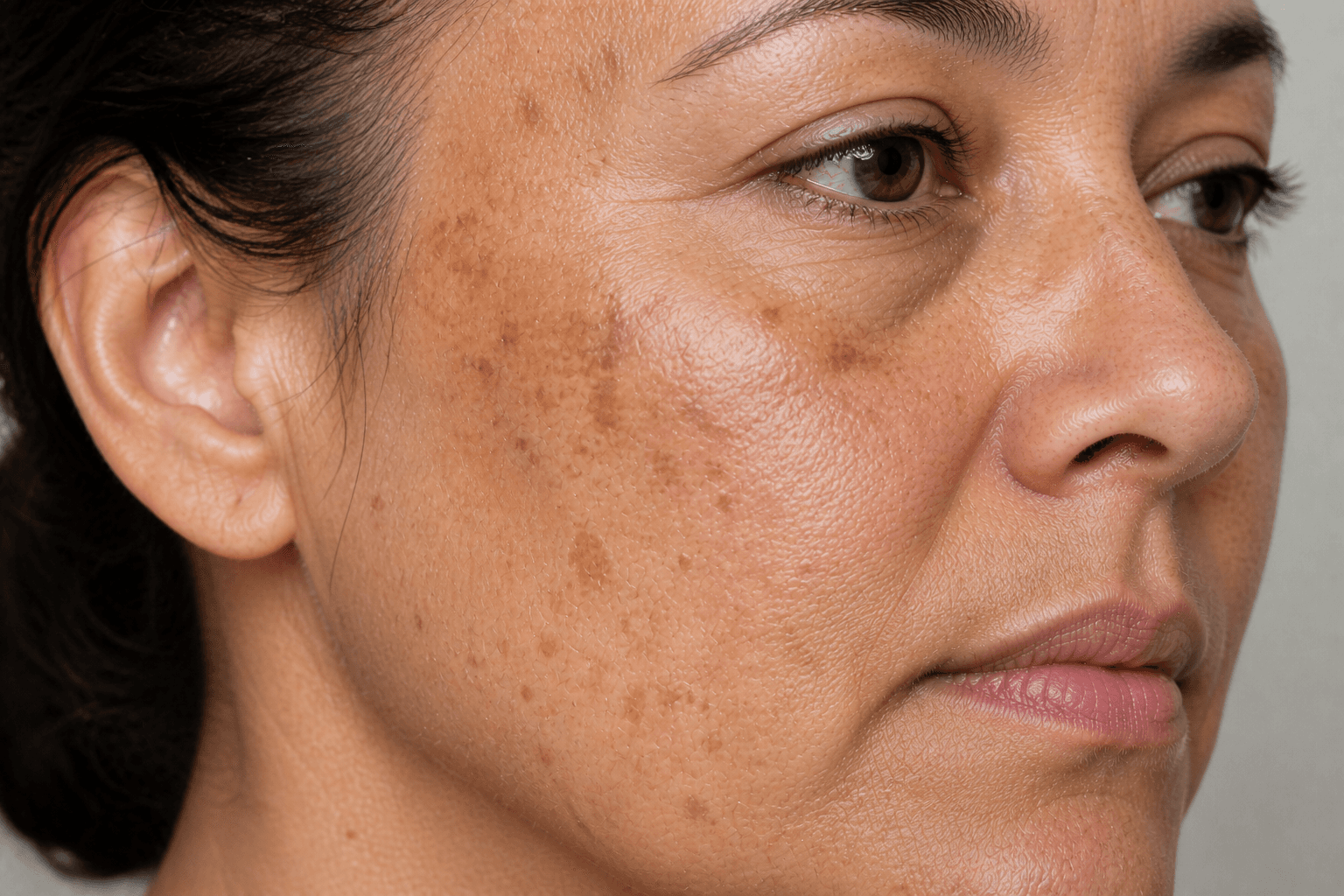
Uneven skin tone in Raleigh, treated by pigment type.
The best treatment for uneven skin tone in Raleigh starts with knowing what is driving the pigmentation. Sun damage, post-acne marks, age spots, and hormone-driven pigmentation each respond to different treatments, and treating the wrong one with the wrong tool can make the problem permanent. For melasma specifically, see our dedicated melasma page, which has its own clinical protocol.
- All Fitzpatrick skin types
- Physician-supervised
- Pigment-safe lasers
- Bilingual care
What this is
Types of pigmentation (and why they matter)
Different pigmentation needs different treatment. A laser that clears age spots can worsen melasma. A peel that brightens mild sun damage can cause post-inflammatory hyperpigmentation on darker skin. Naming what you have is the first step.
Sun damage and solar lentigines are flat brown spots from UV exposure. Very responsive to laser, IPL (for light skin), and brightening topicals. Post-inflammatory hyperpigmentation (PIH) is the dark marks left after acne, injury, or inflammation. More common in darker skin. Usually fades with time and topicals; lasers can help but must be chosen carefully.
Melasma is hormone-driven and chronic, and requires a specialty protocol covered on its dedicated page. Age spots are accumulated sun damage, treated similarly to solar lentigines. Freckles are genetic, usually benign, can be lightened with caution. Vascular redness and rosacea flushing are a different mechanism (blood vessels, not pigment) requiring a different treatment (vascular lasers).
At La Miel
How we treat pigmentation at La Miel
Customized skincare protocols
Topical actives are the foundation of every pigmentation plan. Tranexamic acid, azelaic acid, niacinamide, vitamin C, retinoids, and (when appropriate) hydroquinone, all prescribed at the right strength for your skin. We carry SkinMedica, SkinBetter Science, GlyMed, and Face Reality.
Pigment-safe chemical peels
For general sun damage and surface pigmentation: glycolic, mandelic, lactic, and Jessner formulations. For Fitzpatrick IV-VI skin, we use gentler formulations and avoid aggressive TCA.
Pigment-targeting lasers
For localized sun spots and age spots: Q-switched or picosecond lasers at appropriate settings. For diffuse sun damage on lighter skin: IPL. For Fitzpatrick IV-VI, we typically avoid IPL and use Nd:YAG or other pigment-safe options.
Microneedling with brightening actives
Microneedling combined with pigment inhibitors drives topicals deeper and triggers skin renewal. A safer alternative to aggressive lasers on darker skin.
Daily UV and visible-light protection
Critical. All pigmentation treatments fail if sun protection is inconsistent. Tinted mineral sunscreens with iron oxides block visible light as well as UV, which matters especially for pigmentation-prone skin.
Ready to start?
A consultation tells us what your skin needs. It takes under an hour.
What to expect
For darker skin tones specifically
If you have Fitzpatrick IV-VI skin, our pigmentation approach is deliberately conservative and built for your skin. This is how you treat pigmentation on darker skin without making it worse.
We avoid IPL
IPL’s broad-spectrum light targets surface melanin, which can burn or cause hypopigmentation on darker skin tones.
We avoid aggressive Q-switched lasers at high fluences
Reserved for very specific spot-treatment cases at conservative settings.
We prefer topicals, microneedling, and gentle peels first
Step up from the gentlest tool that works, not down from the most aggressive.
We build longer treatment timelines
To avoid post-inflammatory hyperpigmentation; faster is not better on melanin-rich skin.
We protect with SPF and iron oxides
Not just SPF. Visible light triggers pigment, too.
Common questions
Frequently asked questions
The best treatment depends on the type of pigmentation, your skin tone, and the cause. Sun damage and age spots respond well to targeted pigment lasers and medical-grade peels. Post-inflammatory hyperpigmentation often responds to topicals and gentle resurfacing over time. Melasma is a special case requiring its own protocol. For darker skin tones, the treatment approach is more conservative but equally effective when done right.
Ready to map your plan?
Tell us what you would like to address. We will recommend a sequence that actually fits your skin, your anatomy, and your timeline.
Ready When You Are
Two ways to start: book the specific treatment you came for, or book a consultation and we will build your plan together.
Tue to Wed 10 to 5, Thu 10 to 9, Fri 10 to 3. Closed Sat to Mon.
7718 Six Forks Road, Suite 106, Raleigh, NC 27615