
Microneedling
RF microneedling in Raleigh, for collagen and tightening.
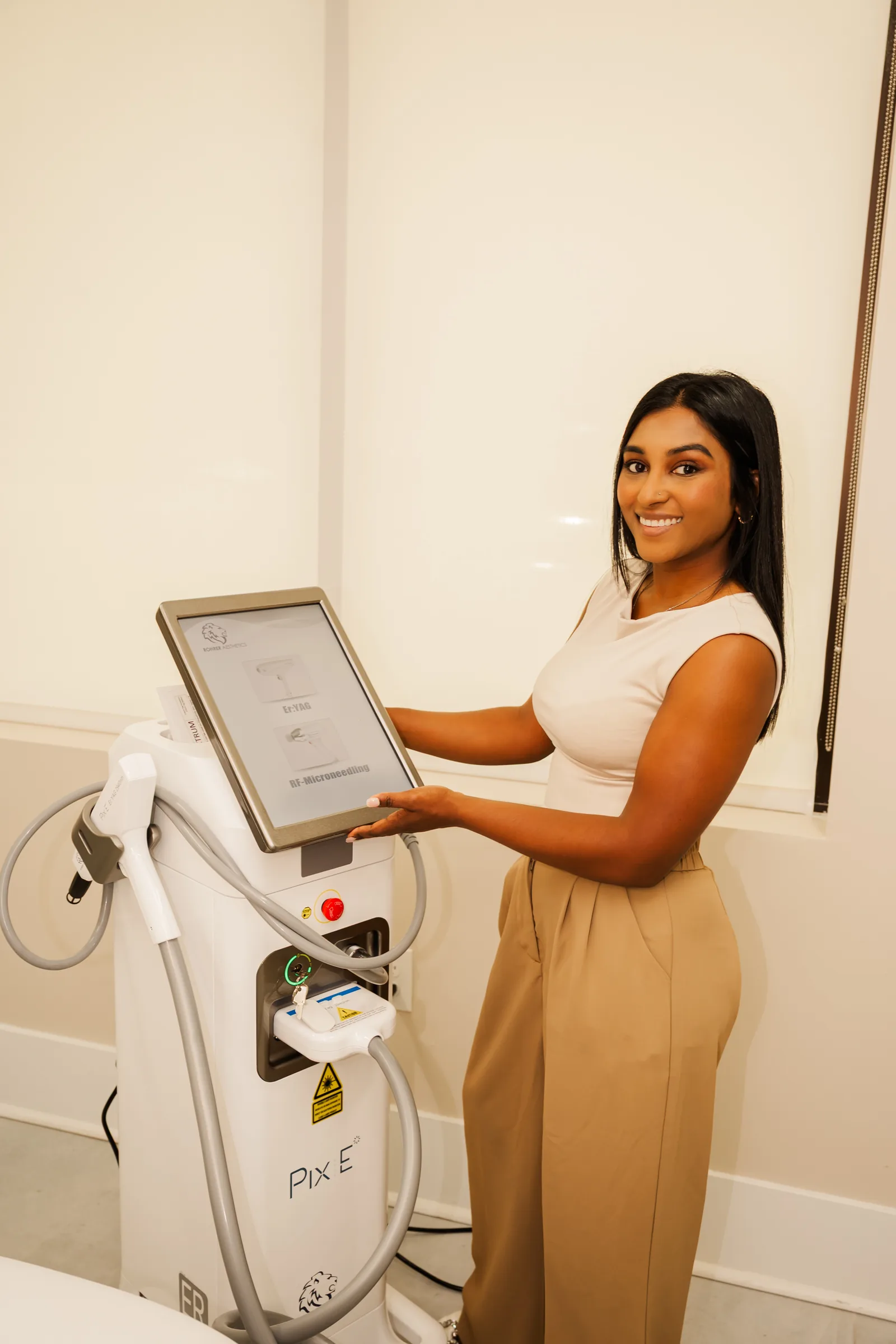
RF microneedling in Raleigh NC on the Pix E platform combines microneedling with radiofrequency energy delivered into the deeper layers of the skin. It is one of the treatments we most often recommend for collagen stimulation and skin tightening, and because it does not depend on light absorbed by pigment, it is generally considered appropriate across all Fitzpatrick skin types.
What this is
What RF microneedling actually does
Microneedling on its own creates controlled micro-injuries that prompt the skin to repair and produce collagen. RF microneedling adds radiofrequency energy delivered through those needles into the deeper layers of the skin. The result is a treatment that works both at the surface, through the needling itself, and deeper, through the heat delivered into the dermis.
That deeper thermal component is why RF microneedling is generally associated with tightening as well as texture. Collagen remodeling takes time, so the change builds over weeks and months rather than appearing the week after treatment.
At La Miel
What we treat with RF microneedling
Depth and energy are selected per patient and per area. The plan is built at consultation around your concern and your skin.
Collagen stimulation and skin tightening
The radiofrequency component delivers heat into the dermis, which is the layer where collagen lives. This is the primary reason patients choose RF microneedling over traditional microneedling.
Suited for: Patients focused on firmness and early laxity rather than surface texture alone.
Acne scarring
Textural scarring sits in the collagen structure beneath the surface, which is what this treatment works on. Improvement is gradual and typically builds across a treatment plan.
Suited for: Patients with textural acne scarring, including those whose skin type makes ablative resurfacing less appropriate.
Texture and pore appearance
Smoothing the skin surface and improving how prominent pores appear, by working on the structure of the surrounding skin.
Suited for: Patients whose main complaint is rough or uneven texture.
Ready to start?
A consultation tells us what your skin needs. It takes under an hour.
What to expect
How this differs from traditional microneedling
These are two different treatments and we keep them separate on purpose, because the right choice depends on what you are trying to change.
Traditional microneedling
Uses fine needles to create controlled micro-injury, prompting collagen production and improving surface texture. No radiofrequency energy is involved. It remains an excellent, well-established treatment and is often the appropriate starting point. We cover it in full on our microneedling service page.
RF microneedling
Does everything traditional microneedling does, and additionally delivers radiofrequency heat into the deeper layers of the skin. That thermal component is what adds the tightening effect. It is generally the choice when laxity and firmness are part of the goal rather than surface texture alone.
Which one is right for you
If your concern is surface texture and general skin quality, traditional microneedling may be all you need. If firmness, laxity, or deeper textural scarring is the priority, the radiofrequency component is usually worth it. We make that call together at consultation rather than defaulting to the more expensive option.
Recovery
Expect warmth, flushing, and some swelling initially, generally settling over the following days. Sun protection matters while the skin recovers. Your provider will give you specific aftercare.
Pricing
A note on pricing
RF microneedling is quoted at consultation, since pricing depends on the area treated and whether you are treating once or across a plan. Financing is available for treatment plans.
Common questions
Common questions about RF microneedling
It is generally considered appropriate across all Fitzpatrick skin types, which is a real advantage of this treatment. The reason is mechanical: the energy is delivered through needles into the dermis rather than as light absorbed by pigment in the skin, so the pigmentation risk that applies to some ablative and pigment-targeting lasers is not the same concern here. That does not mean risk is zero for anyone, and every patient is assessed individually, but it is often the better-matched option for deeper skin tones.
Keep exploring
Related on La Miel
Ready to book RF Microneedling?
Tell us what you would like to address. A consultation maps the right plan, the right product, and the right sequence for your skin.
Ready When You Are
Two ways to start: book the specific treatment you came for, or book a consultation and we will build your plan together.
Tue to Wed 10 to 5, Thu 10 to 9, Fri 10 to 3. Closed Sat to Mon.
7718 Six Forks Road, Suite 106, Raleigh, NC 27615